
The sugarcane and bioenergy sector is one of Brazil’s oldest and most established industries. Over the centuries, it has evolved into a key pillar of the national economy and a driver of development. Today, Brazil is the world’s largest producer of sugar, the second-largest producer of ethanol, while the sector ranks as the fourth-largest source of electricity generation in the country.
Brazil’s experience in bioenergy production and use has made it a global reference. As early as 1931, the government enacted its first legislation mandating the blending of anhydrous ethanol into gasoline. From the late 1970s on, ethanol began to be used as a transportation fuel – initially in dedicated ethanol – powered vehicles, and later in flex-fuel engines, which are now widely adopted.
Ethanol
In response to climate change, ethanol stands out as a key technological solution for building a new era of sustainable mobility. As the biofuel with the lowest carbon footprint in the world.
Sugar
A source of energy and well-being, sugar is the most popular sweetener in the world. Sugarcane is one of the most efficient and sustainable raw materials for sugar production.
Bioelectricity
The fourth largest source of electricity in Brazil, bioelectricity generation by the sugar-energy sector helps balance supply in the country, since the largest volume is generated during the driest period of the year.
CBIO
The Descarbonization Credit (CBio), established under Brazil’s National Biofuels Policy (RenovaBio), is one of the country’s most important tools for reducing greenhouse gas emissions.
New Energy Products
In recent years, the sector has been expanding its energy portfolio. We have the greatest potential for generating biogas and biomethane, substitutes for natural gas and diesel, and great potential for producing sustainable aviation fuel (SAF) and marine fuel.
Products FROM THE SECTOR

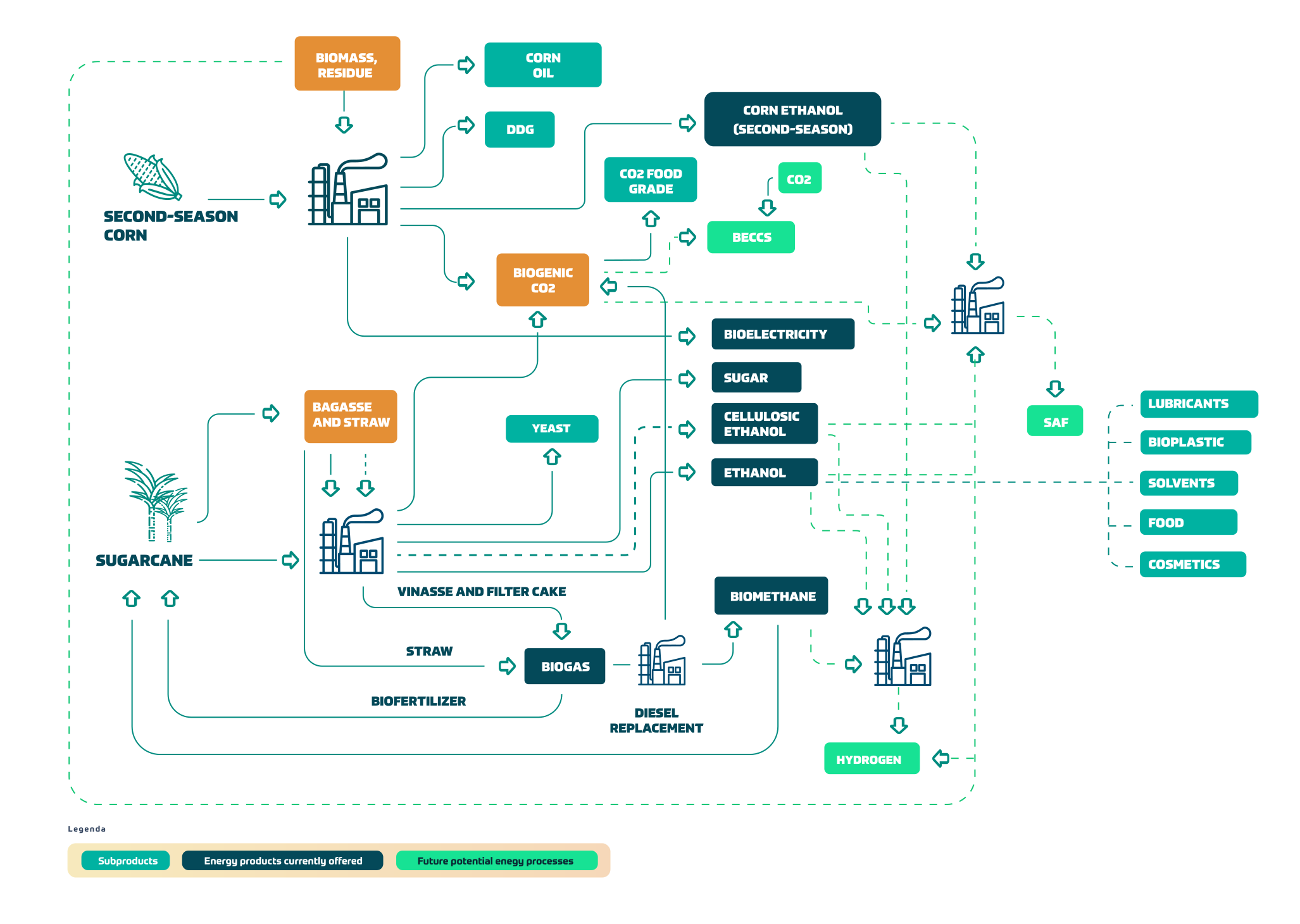
Over the years, the sector has contributed significantly to expanding the supply of clean and renewable bioenergy in Brazil. Our energy portfolio, which was previously limited to ethanol, sugar, and bioelectricity, has expanded with the production of biogas and biomethane, and is moving toward the production of sustainable aviation fuel (SAF) and marine fuel.
This diversification has further strengthened Brazil’s position as one of the global leaders in renewable energy. Today, renewable sources account for 50% of Brazil’s energy matrix – well above the global average of 14.3% and the average of 13.2% among developed OECD countries. This leadership not only supports Brazil’s commitment to its greenhouse gas reduction targets under the Paris Agreement but also delivers broad environmental and socioeconomic benefits.
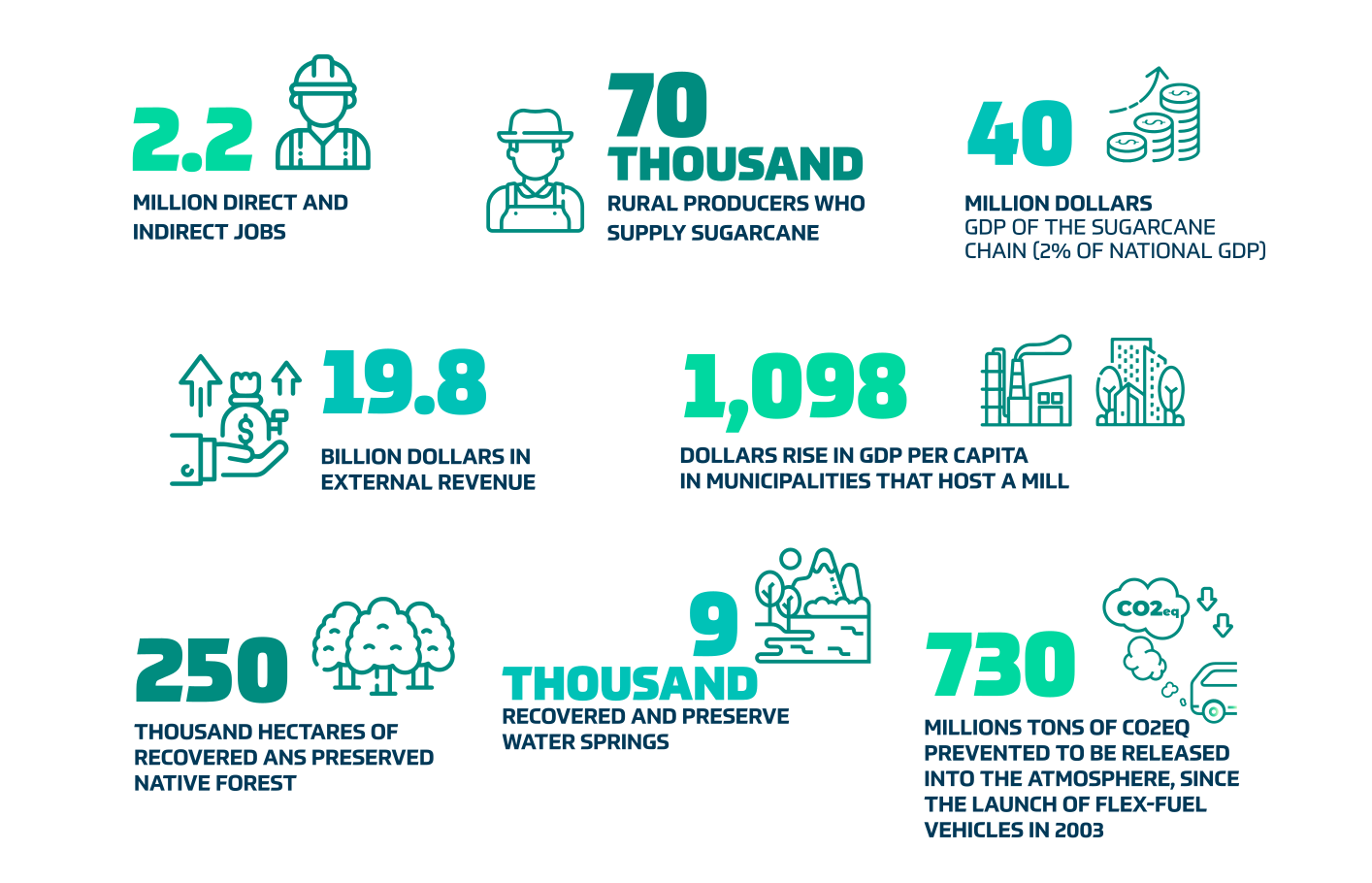
KEY FIGURES OF THE SECTOR
PRODUCTION AREA
Over the past 20 years, from 2004 to 2024, the area under sugarcane cultivation doubled, reaching 10 million hectares. When combined with the area used second-season corn, nearly 13 million hectares are now dedicated to ethanol production.
The expansion of sugarcane fields occurred primarily in degraded pastureland. Thanks to crop rotation practices, the growth in bioenergy production has not compromised food production, which has also increased during this period.
Considering only data from the 117 signatories of the Greener Ethanol Protocol, in São Paulo state, between 150,000 and 200,000 hectares are designated for crops such as peanuts, soybeans, and other food crops annually. São Paulo state is now the country’s leading peanut producer, making use of this rotation land.