
The combination of advancements in ethanol production technology and innovations in the automotive sector in paving the way toward sustainable mobility. Given the challenges of combating climate change, ethanol presents itself as one of the technological pathways for decarbonizing the transportation sector, as it is the biofuel with the lowest carbon footprint in the world.
THE REASONS?


Combustion Engine
When it comes to emissions, ethanol is currently the cleanest fuel in the world. As a result, using this biofuel in combustion engines significantly reduces greenhouse gas emissions.

Hybrid vehicle
Flex-fuel hybrid vehicles, which combine electric and combustion engines, become the cleanest cars in the world when powered by ethanol.

Fuel cell
As technology evolves, the next step is the bioelectrification of vehicles. Using fuel cells, cars will be able to generate electricity onboard by extracting hydrogen from ethanol.
ESTIMATED GHG Emissions
IN THE WELL-TO-WHEEL CYCLE (G CO2 EQ./KM)
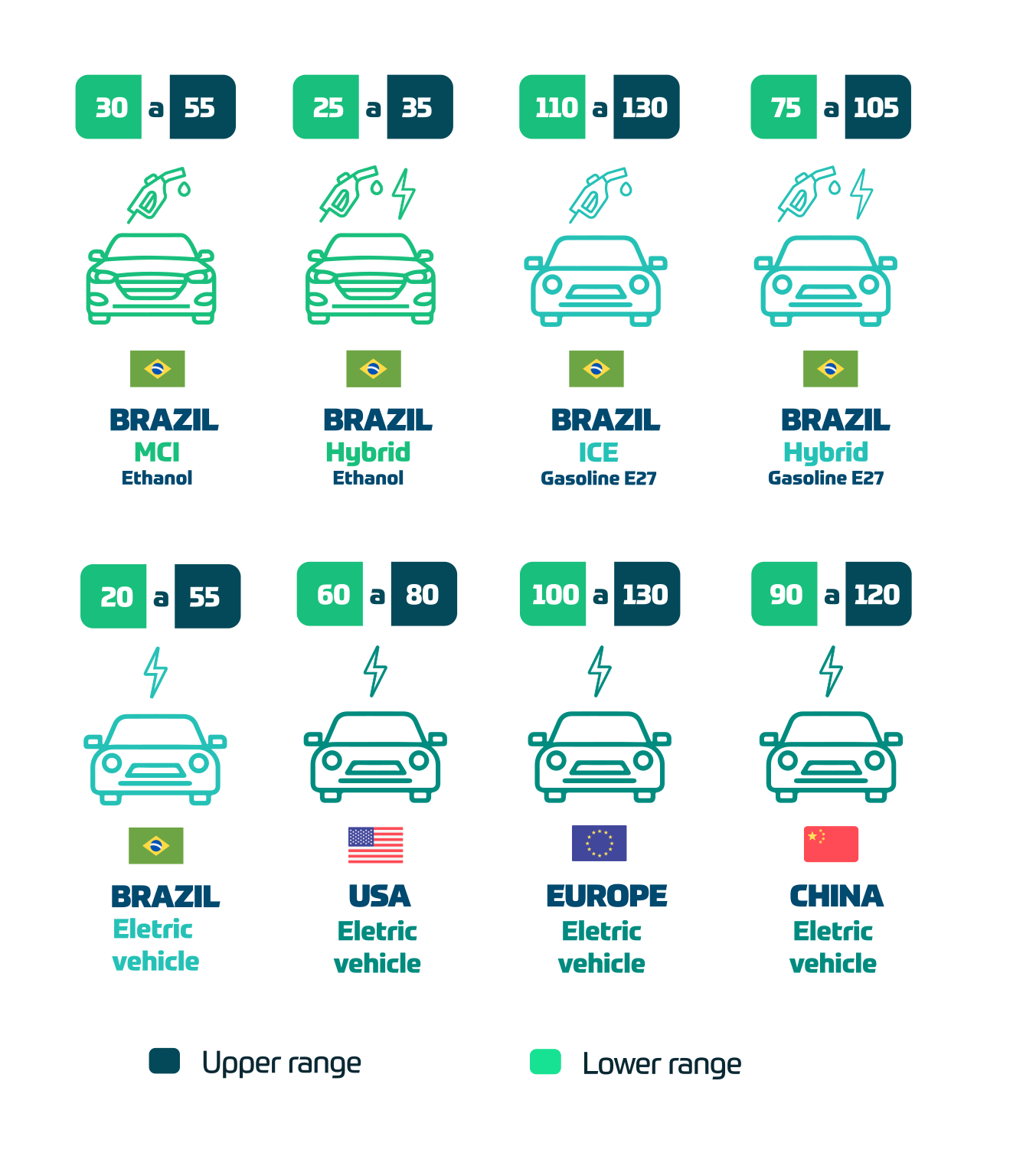
The use of ethanol plays a significant role in reducing greenhouse gas (GHG) emissions per kilometer driven. In Brazil, flex-fuel vehicles fueled exclusively with ethanol currently emit between 30 and 55 grams of CO2 eq./km. In hybrid flex-fuel vehicles running on ethanol, this emission level drops to between 25 and 35 grams of CO2 eq./km, due to greater energy efficiency.
Electric vehicles (EVs) powered by Brazil’s energy matrix — which relies heavily on sugarcane as a primary renewable source — also have low greenhouse gas emissions, ranging from 20 to 55 grams of CO2 equivalent per kilometer. In contrast, EV emissions in regions such as Europe, the United States, and China vary widely, from 10 to 130 g CO2 eq./km, depending largely on the composition of each country’s electricity mix.
With the right applications and innovative technologies, a variety of solutions can coexist to support long-term sustainable mobility. Hybrid and electric vehicles powered by bioenergy can play a key role in promoting social and economic inclusion. By enabling gradual deployment of dedicated electric vehicle charging infrastructure — where and when it is most needed — these technologies help optimize investments.
Brazil holds a privileged position, with ample opportunities for generating renewable energy in various forms and advanced knowledge for developing vehicle technologies aligned with future trends.
In this context, it is crucial to establish public policies that promote technological neutrality, evaluate greenhouse gas (GHG) emissions across the entire product life cycle, and adopt guidelines that fully embrace the principles of sustainability. The overarching goal must be to combat global warming — placing environmental responsibility above individual or sectoral interests.