The Greener Ethanol Protocol has as one of its main objectives the restoration of riparian forests and springs in sugarcane cultivation areas across the State of São Paulo. This pioneering Brazilian initiative promotes cooperation between the government, sugarcane mills, and suppliers to encourage sustainable practices throughout the sugar, ethanol, and bioenergy production chain. It was established in response to the growing need to align agricultural and industrial activities with environmental stewardship in the sector.
Signed in 2007, the Green Ethanol Agro-Environmental Protocol voluntarily accelerated the deadlines set by State Law No. 11.241/2002, which regulated the phase-out of fire as a pre-harvest method in sugarcane fields in the State of São Paulo. The protocol resulted in significant environmental benefits by ending the practice of burning straw before harvest ahead of schedule: in 2014 for mechanizable areas and in 2017 for non-mechanizable areas.
Renewed in 2017 under the name Greener Ethanol, the protocol consolidated the commitments previously established and reaffirmed a series of good practices already adopted by the sector. These include compliance with the Forest Code, implementation of soil and water conservation techniques, reuse of water, protection of native wildlife, and measures to prevent and combat forest fires.
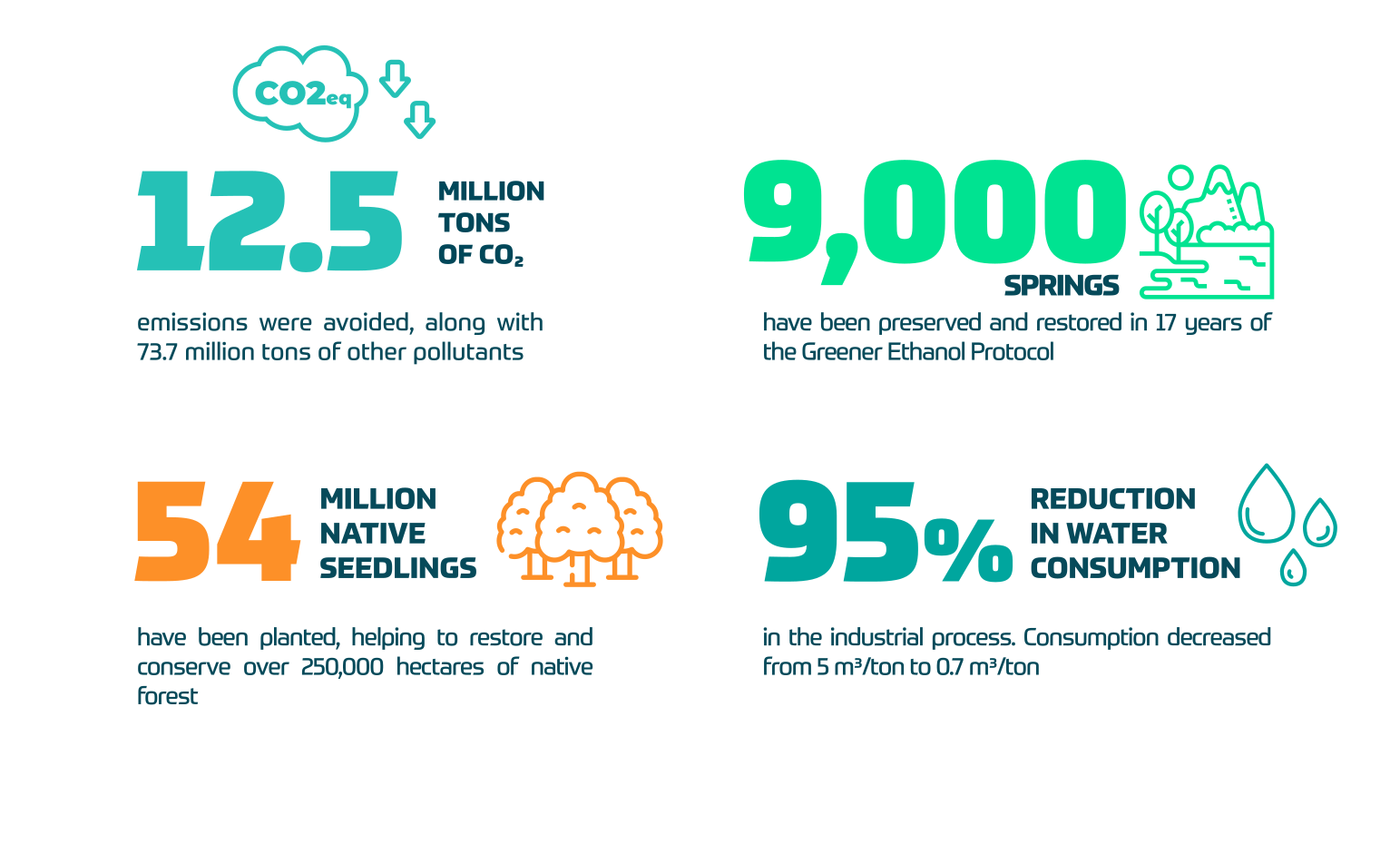
Since 2007, mills that have signed the Protocol have restored and preserved over 250,000 hectares of native forest within sugarcane cultivation areas— this area is equivalent to the same number of soccer fields.
The creation of the Protocol not only reinforced the sugarcane industry’s commitment to water conservation but also enabled the protection and restoration of over 9,000 springs. During this period, water consumption in sugarcane processing was drastically reduced by more than 95%, dropping from 5 m³ per ton of sugarcane to just 0.7 m³ per ton.
The elimination of sugarcane burning also contributed to the expansion of native forest areas, creating conditions for the return of local wildlife to sugarcane-producing regions. In addition, the sugarcane and bioenergy sector now stands out as the industry with the highest number of biodiversity conservation projects in Brazil.
GREEN ETHANOL PROTOCOL numbers
23/24 HARVEST